
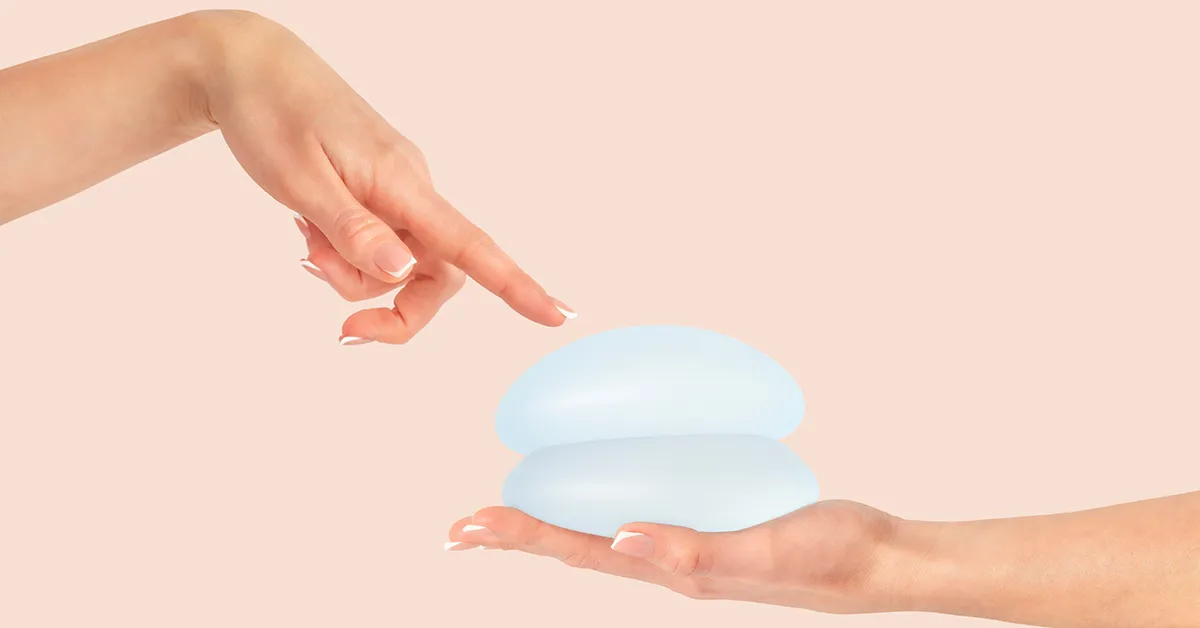
Choosing breast implants can feel like a big decision. You may worry about going too big, looking unnatural, or choosing an implant that doesn’t fit your body. Then you start researching and find even more choices: saline or silicone, round or shaped, smooth or textured.
So, what are the best breast implants?
There isn’t one type that’s best for everyone. The right implant depends on your body and the look you want. Size matters, but so do the implant’s width, shape, profile, and feel.
Dr. Stephen Madry in Barrington, IL, works with each patient to choose an implant based on their body and goals. Understanding your options before your consultation can make that choice feel a lot less overwhelming.
Which Breast Implant Is Best?
The best implant for you depends on factors such as your chest width, existing breast tissue, skin, and the amount of fullness you want.
Even implants with the same volume can look very different. A wider implant with a lower profile spreads more across the chest. A narrower implant with a higher profile projects farther forward.
That’s why choosing an implant isn’t as simple as picking a cup size. Your surgeon needs to consider how the implant will fit your chest and the shape you want to create.
What Are the Different Types of Breast Implants?
Breast implants come in several types. The differences include how they feel, hold their shape, and look.
Saline Implants
Saline implants have a silicone outer shell filled with sterile saltwater. If the implant ruptures, it deflates and your body absorbs the saline.
Saline implants tend to feel firmer than silicone implants. They may also show more rippling in women who have less natural breast tissue.
The FDA has approved saline implants for breast augmentation in women 18 and older.
Structured Saline Implants
Structured saline implants also contain sterile saltwater. An internal structure helps the implant hold its shape and gives it a more natural feel than a traditional saline implant.
This may be an option if you prefer saline but want an implant that feels more like natural breast tissue.
Silicone Implants
Silicone implants contain a soft silicone gel that tends to feel more like natural breast tissue. They come in many sizes and profiles, making it easier to match the implant to your body and goals.
The FDA has approved silicone implants for breast augmentation in women 22 and older.
Silicone implants also need long-term checks for rupture, which can sometimes happen without symptoms. The FDA recommends an ultrasound or MRI five to six years after surgery and every two to three years after that.
Form-Stable (Gummy Bear) Implants
Gummy bear implants contain a thicker silicone gel that holds its shape more firmly than traditional silicone gel. Some form-stable implants also have a tapered shape that creates a natural-looking slope.
What Is the Difference Between Round and Shaped Implants?
Round implants can add fullness to the upper part of the breast. Because they have the same shape all the way around, rotating usually doesn’t change the breast’s appearance.
Shaped implants have more fullness toward the bottom and taper toward the top to create a natural-looking slope. If a shaped implant shifts or turns after surgery, it can make the breast look uneven or change its shape.
Neither shape is automatically better. The right choice depends on your natural breast tissue and the result you want.
What Is the Difference Between Smooth and Textured Implants?
Smooth implants have a soft outer shell that allows them to move within the implant pocket. This can create more natural movement.
Textured implants have a rougher surface designed to help tissue attach to the shell and limit movement. Textured implants have also been linked to a higher risk of breast implant-associated anaplastic large cell lymphoma (BIA-ALCL), a rare type of lymphoma.
Your surgeon can explain the benefits and risks of each implant surface before surgery.
Can You Combine Breast Implants With Fat Transfer?
Yes. Fat transfer can be used on its own or along with breast implants.
During fat transfer, fat is removed from another part of your body with liposuction and injected into the breasts. On its own, fat transfer works best when you want a smaller increase in breast size.
When combined with an implant, fat can also soften the breast’s contour or help cover visible implant edges or rippling.
Find the Best Breast Implants for Your Goals
Choosing a breast implant involves more than deciding how much larger you want your breasts to be. Implant width, profile, shape, fill, and placement can all change your final result.
Dr. Stephen Madry offers breast augmentation with implants and fat transfer in Barrington, IL, for patients throughout the northwest Chicago suburbs. Schedule a consultation with Dr. Madry to compare your options and create a breast augmentation plan that fits your body and goals.
Related:
How Long Do Breast Implants Last?
Breast Implant Revision: How to Know It’s Time
Breast Augmentation Price: 6 Factors to Consider
Breast Augmentation: Gummy Bear Implants vs. Silicone vs. Saline